The Death of Patience: How "Fortnite Brain" is Ruining Modern Gaming

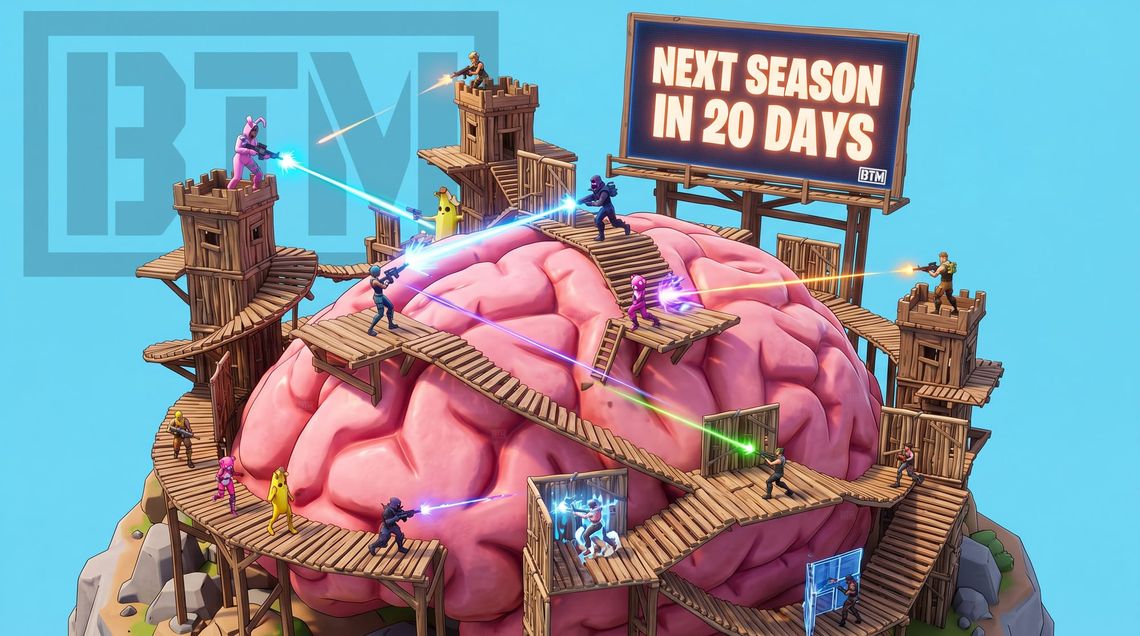
The modern gaming community has developed a severe, toxic addiction to speed. We have officially reached a point where if a game does not drop a shiny new cosmetic, a balance patch, or a crossover event every single Tuesday, the player base declares the game dead. Grab a beverage, sit down, and let me tell you how it is. This "Fortnite Brain" mentality is not just an annoying social media trend: it is actively destroying the quality of the games we love. By demanding a constant stream of new content, gamers are forcing developers to release rushed, buggy, low-quality slop labeled as "Major Updates" instead of meaningful, polished expansions that actually have lasting effects. It is time to address the real-world proof of this crisis, map out the historical progression that got us here, and explain why this culture of impatience needs to be extinguished.
The root of this problem lies in how modern live-service games have systematically rewired the psychology of the average player. For decades, the value of a video game was determined by its mechanical depth, its narrative quality, and the sheer joy of mastering its systems over months or even years. Today, that relationship has been replaced by a continuous dopamine loop fueled by battle passes, daily challenges, and weekly content resets. Players are no longer driven by the desire to improve their skills or enjoy the game for what it is. Instead, they are driven by the urge to watch a progression bar fill up. The moment that progression bar stops moving, or the moment a developer takes a few weeks to focus on structural stability rather than adding new toys, the player's attention span collapses, leading to review-bombing campaigns and social media toxicity.
The Ancestry of the Grind: Pre-Fortnite Pioneers
To understand why players are so impatient today, we have to look at the history of how the "Games as a Service" model evolved. Fortnite did not invent these mechanics in a vacuum: it was standing on the shoulders of several western GaaS pioneers.
In the early 2010s, League of Legends popularized Western free-to-play PC gaming by releasing a new champion every two to three weeks, establishing the idea that a game must constantly inject new characters to stay relevant. In 2013, Dota 2 introduced the Interactive Compendium for The International, which served as the primitive blueprint for the modern battle pass. Two years later, Team Fortress 2 launched the Gun Mettle update, pioneering contract passes that gave players weekly challenges to earn cosmetics.
The Fortnite Catalyst: Unprecedented Popularity Breeds Industry Standards
But it was Fortnite in 2017 that took these scattered ideas, unified them under a free-to-play battle royale wrapper, and industrialized the weekly update model on a scale the industry had never seen before. The reason this became the new industry standard almost overnight was due to Fortnite's unprecedented, astronomical popularity in such a short window of time. It became a global pop-culture phenomenon virtually overnight, capturing the attention of millions of players and generating billions of dollars in revenue.
This explosive rise sent shockwaves through the boardrooms of every major gaming publisher in the world. Terrified of losing their audience to Epic Games, competitors panicked and immediately copied the weekly content model. By forcing their own studios to copy the weekly content cycle of map tweaks, new items, and brand crossovers, these publishers created an unsustainable arms race that permanently rewired player expectations.
The Real-World Proof of Live-Service Burnout
This weekly cycle has put game developers in an impossible position, and we have seen the devastating real-world proof of this live-service burnout across the industry over the past year. Look at the trajectory of Helldivers 2, which launched as a massive, unexpected triumph of cooperative game design. Almost immediately, the community began demanding weekly balance updates, new weapon variations, and constant tweaks to the game's mechanics.
In a desperate bid to maintain their astronomical player numbers, the team at Arrowhead Game Studios tried to keep pace with these demands. The result was a series of rushed, untested patches that broke weapon balance, introduced severe server instabilities, and ultimately alienated the very community they were trying to please. The developers were eventually forced to make a public admission that their release schedule was unsustainable, announcing a deliberate slowdown to prioritize quality and thorough testing over speed.
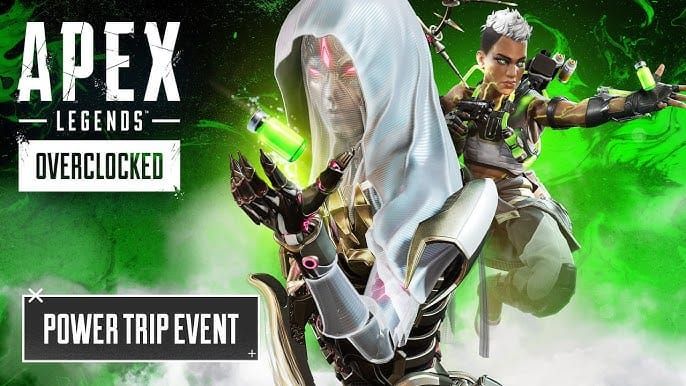
We see the exact same industrial grind crushing legacy titles like Destiny 2 and Apex Legends. Both franchises have been locked in a relentless seasonal release cycle for years to appease corporate shareholders who demand consistent quarterly engagement metrics. Because the developers are constantly running on a treadmill to hit these arbitrary deadlines, they are forced to rely on recycled seasonal events, superficial cosmetic bundles, and buggy gameplay additions that lack any real depth. When you force a creative team to ship code every three months just to keep the player numbers from dipping, you do not get innovation. You get rushed, uninspired updates that break the core engine and leave the player base feeling increasingly hollow.
The Illusion of the "Major" Update
This culture of impatience has also allowed publishers to completely redefine what a "Major" update actually is, conditioning players to accept marketing hype for low-effort content. We are constantly told to get excited for updates that amount to nothing more than a new battle pass, a couple of recycled weapon skins, and a temporary game mode that will be gone in two weeks. This is the definition of content slop. It exists solely to satisfy the community's demand for a weekly download notification, contributing nothing of lasting value to the game's structural health.
Compare this hollow cycle to the developers who actually saved their games by having the courage to slow down and ignore the weekly noise. Cyberpunk 2077 did not salvage its disastrous launch by dropping weekly cosmetic packs or minor balance tweaks. The team went silent for months at a time, ignoring the immediate backlash to rebuild the game's core systems from the ground up, culminating in the massive Patch 2.0 and the Phantom Liberty expansion. No Man's Sky continues to be celebrated as one of the greatest redemption stories in gaming history precisely because Hello Games takes the necessary time to build, test, and refine their massive, free expansions rather than rushing out half-baked patches to feed the social media monster.
Extinguishing the Culture of Impatience
If we want video games to return to a state of actual quality, this culture of impatience needs to be completely extinguished. Gamers must stop equating a lack of weekly updates with a dead game and start respecting the reality of software development. Creating balanced, polished, and mechanically sound content takes time, testing, and creative freedom.
When we demand instant updates, we are actively encouraging publishers to exploit their developers and ship broken products. It is time to let developers breathe, let games bake, and prioritize lasting quality over weekly distractions.
- OMYN
Break The Meta is an esports & gaming news publication. Follow us for coverage that doesn't put you to sleep.